
South Coast Line
And the strange connections between us all

This is a brief story about a brief poem, with the poem itself inserted in the middle. You don’t need to know the story to appreciate the poem, and I wrote the poem before half the story happened, but sometimes events link themselves together after the fact and then they all make sense - or at least, a new kind of sense.
Life can be like that.
This all happened just a year or two after I left Alice - the place, not a person, though I was leaving one of those too. You might say I was adrift in my own mind as much as geographically, but I had two anchors to save me - my children, whom I love, and my writing, which was finally achieving the kind of focus I had struggled to find for years. For the first time I was writing poetry and prose which said what I was trying to say, and I was even winning awards and finding publication in journals and newspapers.
I was also working on a modest Poetry collection - poetry from and about my years living and working in remote First Nation Aboriginal communities in the desert lands of Central Australia. It helped me process my grief over what I had left behind in Alice Springs - the place, the people, and the woman. The first draft had been accepted for publication by Five Islands Press, a small independent publisher based in Wollongong on the South Coast of NSW, and the Editor and lifeblood of Five Islands - the remarkable Ron Pretty - had invited me to a week long poetry workshop at the University of Wollongong with a group of other Poets whom he was planning to publish.
To get there I travelled by train from my then home town of Newcastle, rattling down the 160 kms to Sydney’s Central Station where I changed to the South Coast Line, which first traverses the vast rambling urban sprawl of Sydney then wends its way back through the hills and Eucalypt forest to the coast.
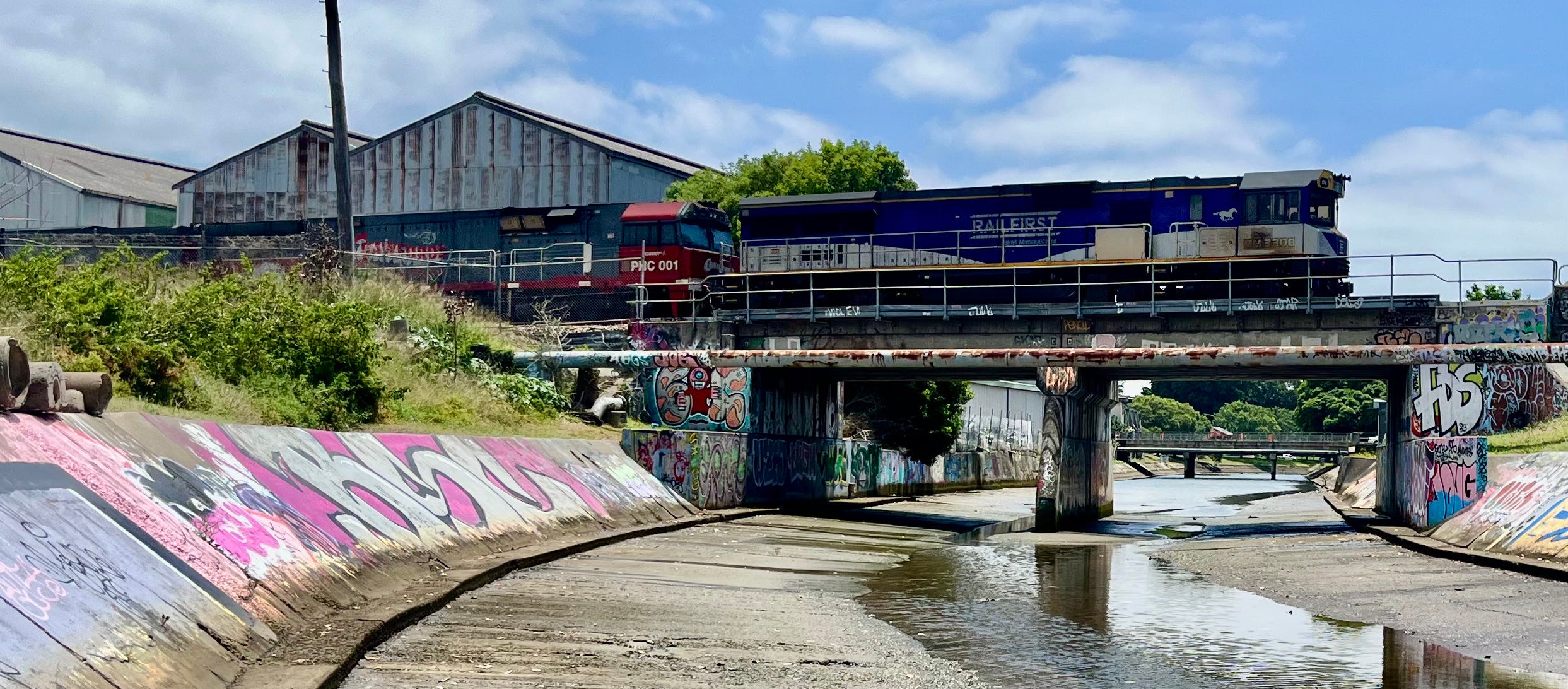
The last half of the journey South pierces all the little communities which are strung like beads along the railway line, huddled between the glittering Summer sea and the green ramparts of the coastal mountains - at the end of which is Port Kembla, a hard scrabble steelworks town which - like steel towns in the USA and the UK - was battling to survive. I had grown up in a town like that myself, so the scent of the struggle was familiar.
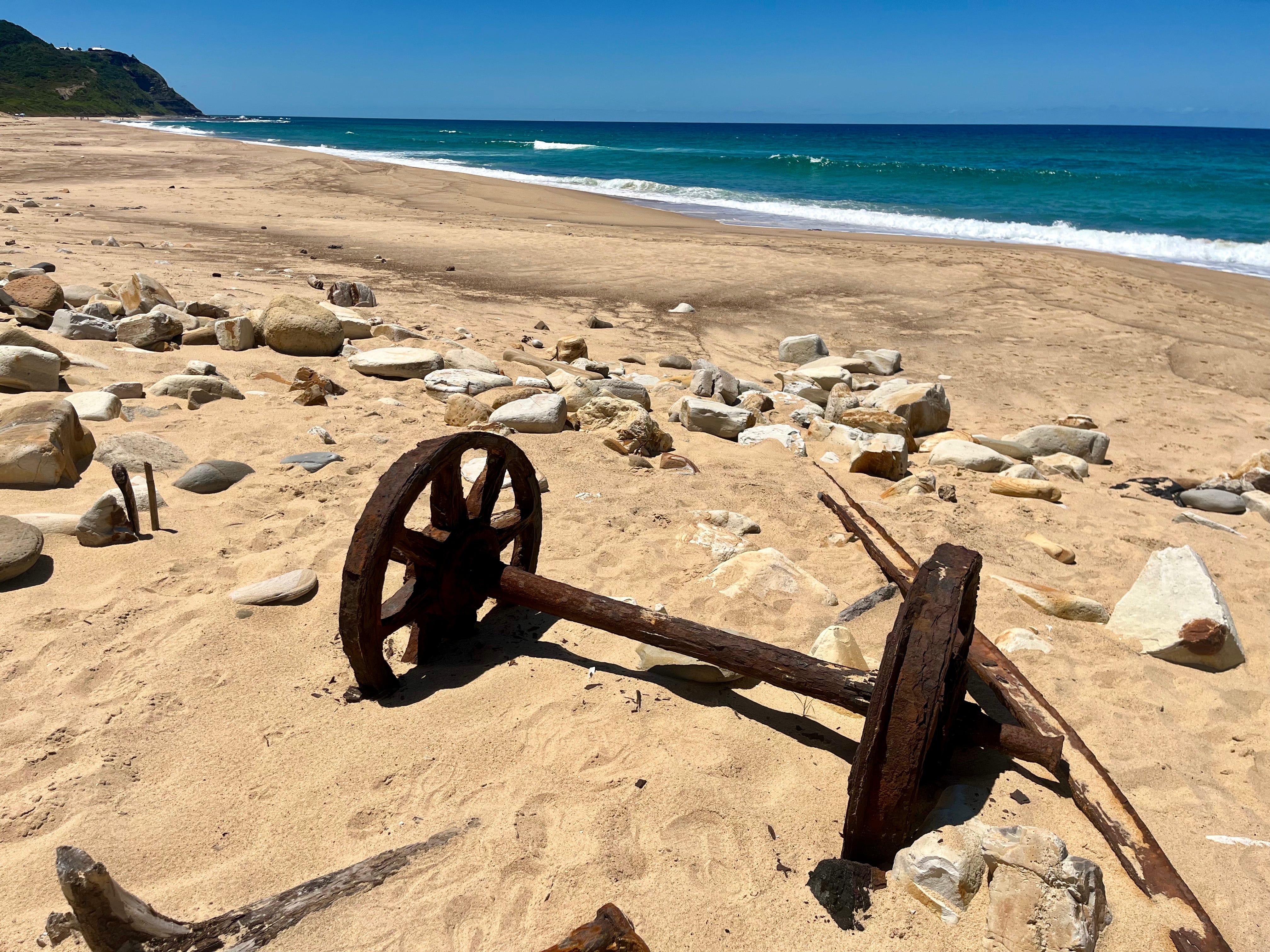
It was Summer. It was hot. It was January and School holidays. Everyone was going somewhere and all for different reasons and I sat listening to the voices and watching the world whirl by and reading the faces and imagining the train as a volume of short stories, with each passenger a chapter.
In my journal, in wavy handwriting because the train was rocking and swaying (our trains then were cheap but old, and the track quality abominable)1, I wrote my poem - “South Coast Line.”
At the workshop, across the week I deepened my friendship with a supporter of Five Islands Press, the gentle and generous Poet Deb Westbury. Deb was helping Ron with the workshop and devoting her acute sensitivity, and boundless tact, towards helping a diverse group of sometimes prickly Poets to refine our draft collections.
Deb herself was from the South Coast so when I returned home I printed up my South Coast Line poem and I sent it to her, with my thanks.
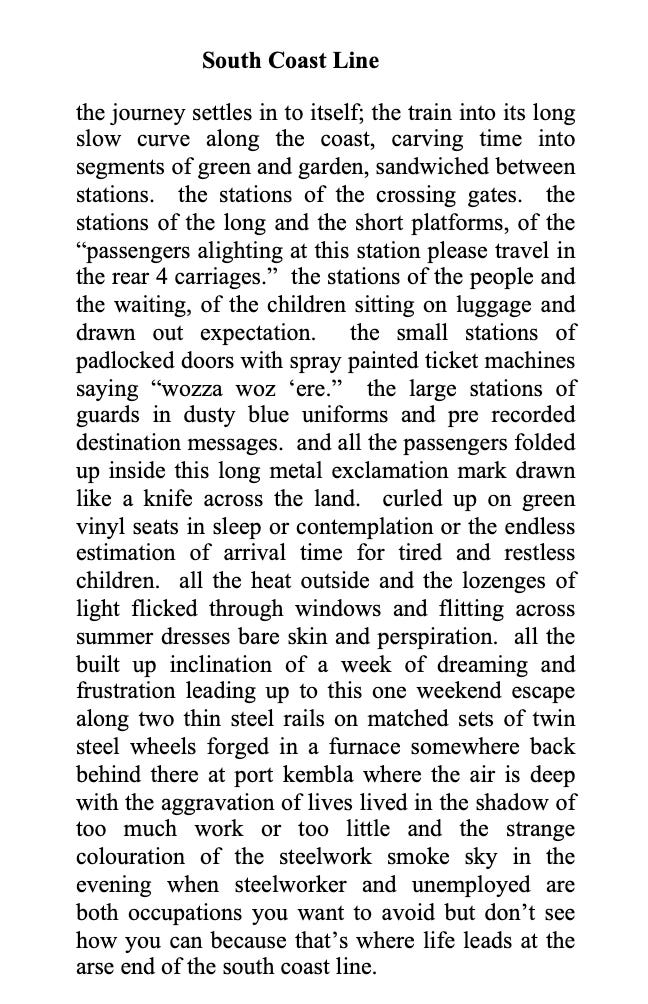
The version I sent - which was later published in the Ulitarra literary journal where I had my first  "Big Break" - is tightly formatted with right and left justification, to perhaps mirror the confines of a train carriage, or of twin steel tracks, or the lives constrained by the economic realities of life in a declining steel town.  The Substack text editor can't handle that so I have pasted the original as a graphic, below.

So read the poem, if you like, then read the rest of this story....
The story continues:
I no longer have the message I sent to Deb with the poem. In my head it was an email, but the mind reconstructs what it cannot remember and it doesn't always tell you that is what it has done. Our memory is a vast road network that we build and maintain. Over time, bends are straightened, bridges are rebuilt - and not always at the same spot or with the same materials. From time to time we set off on a journey down a synaptic laneway, only to get the sense that - possibly - the map itself has subtly changed.
I am sure of this though; a reply came, warmly praising the work and encouraging me to seek publication - perhaps to include it even in my anthology. I was still quite unsure of myself as a Poet, and deeply respectful of Deb, so the praise and the advice warmed my day in the simplest and most uncomplicated fashion.
A few months later, another of my poems won a major national award, sponsored as it happens by Ulitarra. (If you have read my Post and Poem “My Big Break” you will understand the delicious irony of that).
The winning poem was published in Ulitarra and they also published South Coast Line. The two appear consecutively in the same issue.
A few weeks later again Deb was in my home town at the invitation of some local High Schools - her own work was on the syllabus for their final year exam and she had come to speak with groups of senior students. We met up one lunchtime for a meal, in between my work and her meetings.
After discussing her morning I asked Deb if she liked “South Coast Line” because she herself lived along that route in one of the coastal towns.
“Yes,” she said, “in part.”
There was a pause. I could feel her sifting her words, looking for the right combination, as a Poet might, then realising that simplicity was best, as it all so often is.
“Also, my Son, Luke, stepped in front of a train on the South Coast Line at Austinmer, and he died.”
It had happened just under three years ago. Luke was 16.
No-one had warned me. No-one had said. What was there for them to say? Deb’s friends had been close around her. She herself, I understand, spoke of this seldom. Her friends respected that.
Even so I felt a pit of unease open - a nausea that I had sent my poem to Deb and unknowingly reopened this wound, and that anything I said might only compound the pain.
The truth however, was that Deb understood her pain and was at peace with it. If anything, she reflected, my poem reminded her that the world moves in strange recursive patterns and that poetry lives within them.
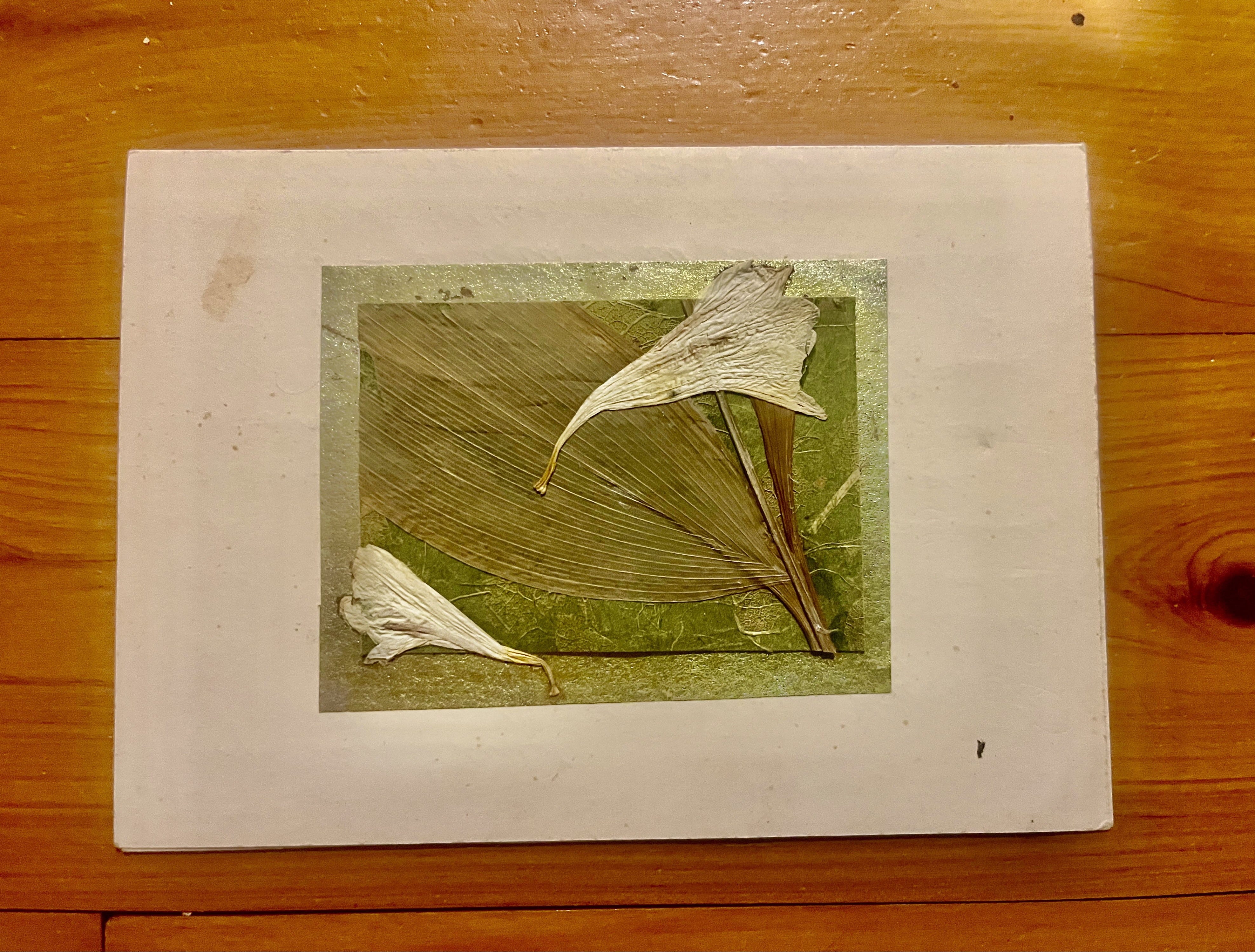
A few weeks later a hand made and hand written card arrived in the mail. It was gorgeous. It still is. On the front are two pressed flowers and a leaf. I have it with me now.
Inside, a letter from Deb. She congratulated me on another poetry award I had recently won. She had been visiting a mutual friend, Brook. They had drunk a toast to my success. She had also been to the Varuna Writer’s Centre in the Blue Mountains, west of Sydney. There was an open day there coming up. She was launching a book by another mutual friend and hoping I could come.
And then she writes:
“Speaking of Varuna, this card features some Lily of the Valley leaves from there - and some flowers that Luke pressed in a book when he was 8 or 9, which I found after his death. They’re special. So are you. Thanks for your lovely letter - Love, DEB.”
We stayed in contact for a while. Deb was at the launch of my little chapbook collection, Spinifex, the next year. Life however, swept me up. My marriage dissolved. I was in a new relationship - with Meg, who features so often in my work. I was sharing care of my children and I took on a fascinating but consuming role at work to cover the costs of two households. I kept writing but I had no time left for the Poetry world. I ceased all publication. I dropped out of view and I lost all contact with all my Poet friends - including Deb Westbury. For 22 years and more I published nothing, though Meg and I lived a full and happy life.
Our children grew. Our love evolved. Meg and I have done wonderful things together and all along she has encouraged me to keep writing. When I wrote of the woman I had left behind in Alice Springs Meg printed it, pinned it to the fridge and said “Write more!”
I did. Much of what I wrote is here on Substack, with more to come - I hope.
The woman in Alice Springs - also a Poet - herself moved on through those years, and has published a couple of successful books.
I found her first book in a shop in Sydney, a couple of years ago now, and I bought it - of course.
Inside is a dedication, to her Mentor and a friend I did not know she had; the person who had helped her on the Poet’s journey and who - I discover - died in 2018.
That dedication reads:
To Deb Westbury
Poet, mentor, dearest friend.
Which simply proves what Deb had said to me - when I was also her friend - 18 years previously. The world does indeed move in strange recursive patterns, and poetry - most surely - lives within them.
Nothing much has changed with that….
Hi Dave, this was a lovely read. Full of nostalgia and all the feelings that emerge in the remembering. And I have to say I love the fact that the story has a train and a knife in it! 😆… “this long metal exclamation mark drawn like a knife across the land”
What a touching story, Dave. I could sit with you and listen to your stories all day long. Love the poem. I can't imagine what Deb must have felt after reading it. I have two boys and I cannot bring to put myself in her shoes. Life is quirky and beautiful.