
Japanangka's Dog
A lesson in life

Another one from the memory vault.
The poem that follows was first published in the Overland literary journal, issue 152 in 1998 - one of Australia’s better literary journals and a survivor, because they still publish today. It also appeared in “Spinifex,” Five Islands Press, 2001 - my little collection of poetry from the desert.
However, the events in Japanangka’s Dog occurred in 1985 or 1986, when I was living and working in the remote Warlpiri Aboriginal/First Nation community of Lajamanu, in the northern Tanami Desert of Central Australia. This makes “Japanangka’s Dog” a companion piece to “Lajamanu Morning” and “Junga Yimi” - both of which have already been published here on my Poetry Shack Substack. The three poems stand alone but they each make greater sense if you read them all, because one poem cannot encapsulate the complexity of life in the remote First Nation/Australian Aboriginal communities of my country. (Neither can three, but together they start to paint a picture. The later work - “Kngwarreye” - is also relevant, even though those events occurred far from Lajamanu, because the issues are similar across all the remote communities).
The poem opens at the Lajamanu community store. If you have read “Lajamanu Morning,” you will have a better idea of that location, but the photo below shows Lajamanu on a day when a severe dust storm was sweeping in to engulf the town.
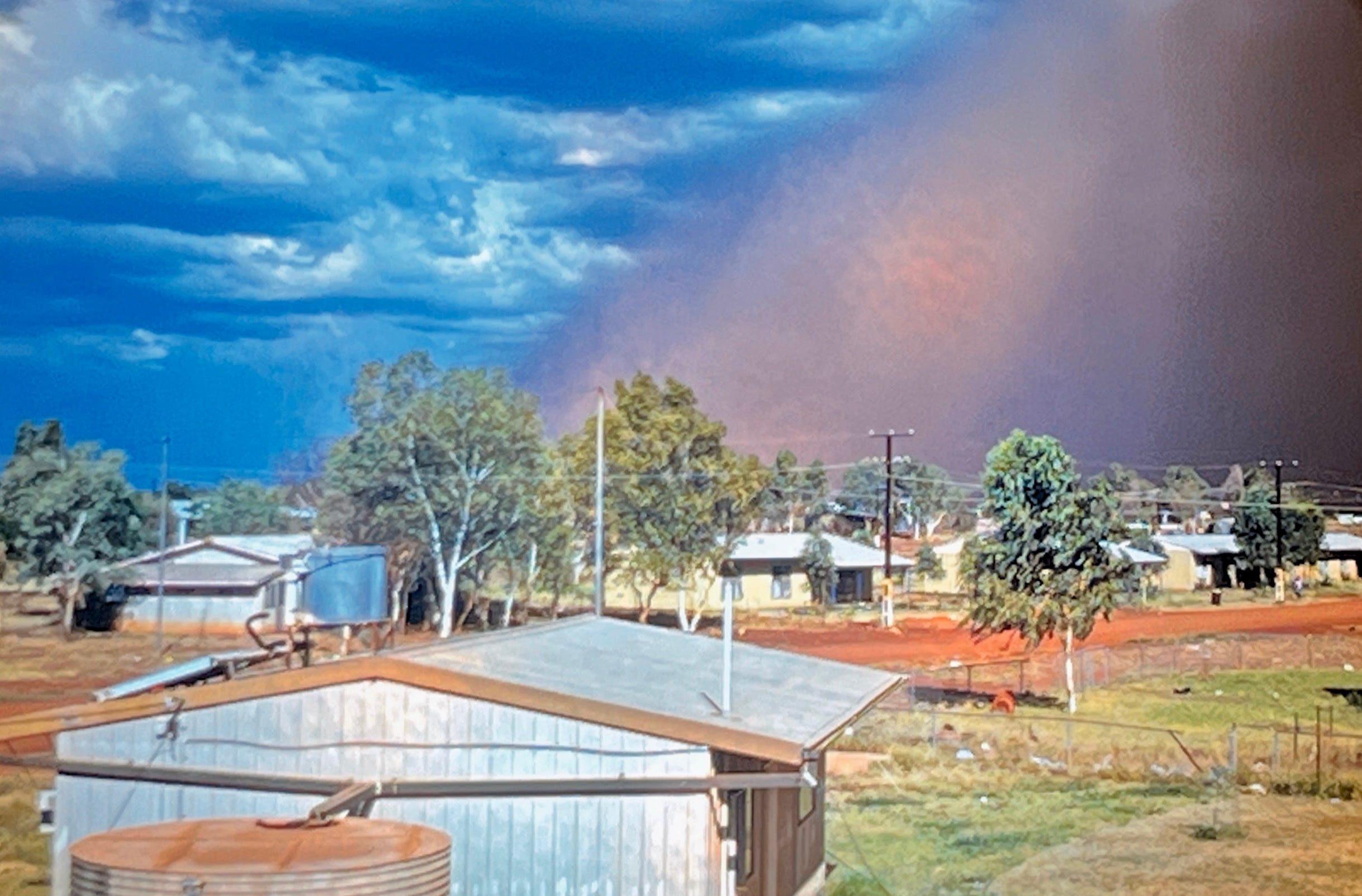
Dust storm consuming Lajamanu - 1986
My poem “Lajamanu Morning” attempts to describe the community, the material poverty and the cultural richness of that place, and of the people who live there.
I hope it also conveys the sheer chaos that roils around a community store on a day when wages or pensions are paid and people can afford to eat.
Everyone seemingly arriving at once and also leaving at once in any given moment as if both states can simultaneously be true, like a quantum computing calculation of shopping. Beat up vehicles backing and forwarding. Kids and dogs darting between wheels, in and out of doorways and around and over adults. Diesel residue and dust coating any stable surface. Noise, commotion and locomotion erupting all around.
Children. The children are the centre of everything. They swirl about the women sitting in groups under the sparse gum trees - eucalypts - which struggle up out of the dusty grassless earth in the “park” opposite the store. The women are rocks, immobile. The children are waves washing around them, tripping over them. The dogs - loved as pets, valued as hunting companions, but underfed because no-one has enough of anything, let alone food - dart and dash and bark and snap, or sometimes just slump, unwell and tired in the dry desert heat, under any shady spot, even a parked car.
And me - an outsider, a stranger, a kardiya, accepted into the community with a generosity I never felt I deserved - driving my beat up old van because that was something I could offer, and terrified - constantly - that I might fail to see a child and accidentally cause a tragedy, in a place which already had far too many.
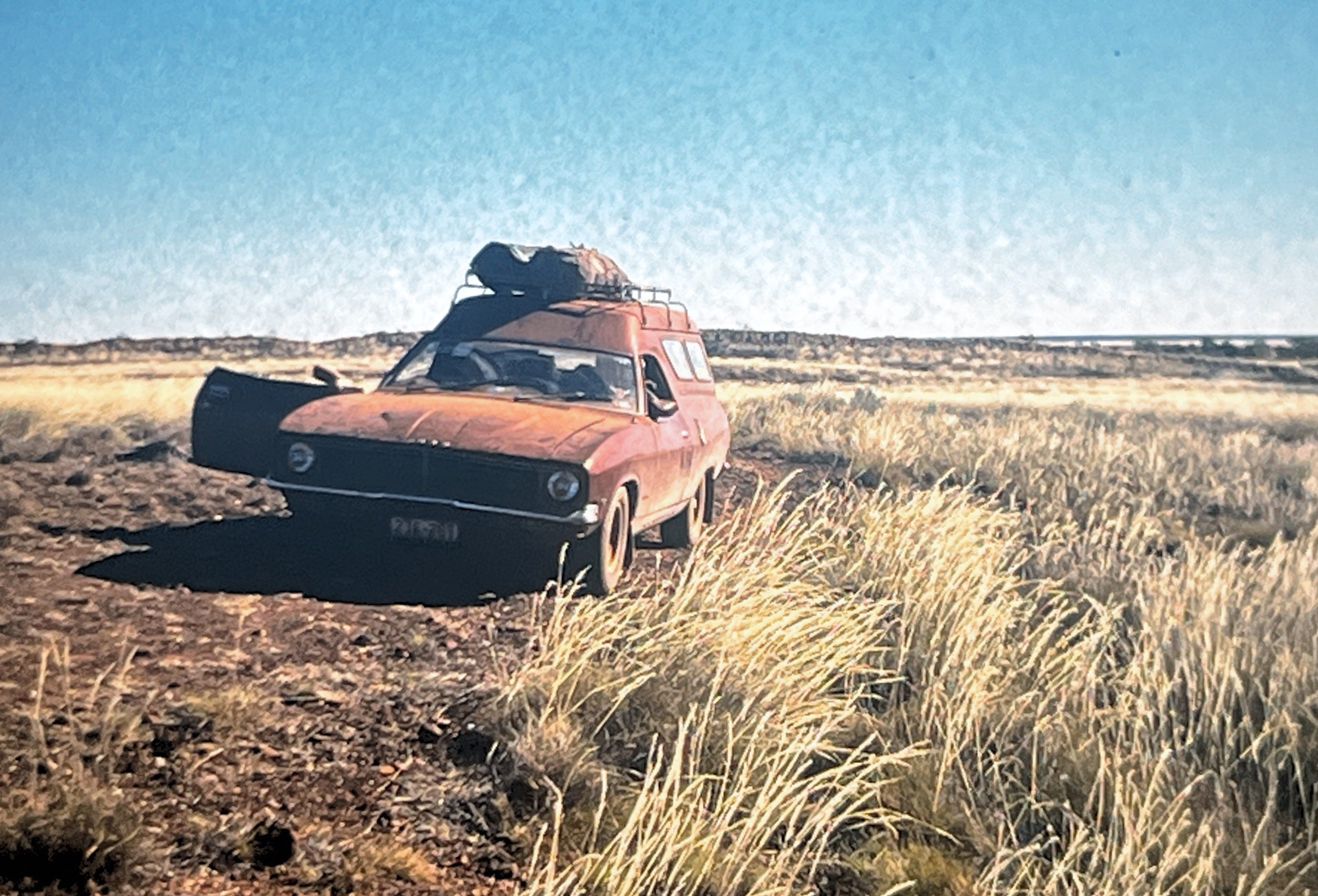
Below: my old XB panel van, seen here parked in the spinifex.
This is a true event
And this is how it goes:
                        Japanangka's Dog

			Reversing out from
			the Lajamanu store
			there came a bump,
			a single strangled yelp,
			and the certain knowledge
			that at last
			I had hit a dog.
			Old Japanangka
			in the seat beside me
			simply shrugged.


			That was my dawg
			he said,
			conversationally,
			glancing out the window,
			and deftly changed the subject -
			to housing,
			a new water tank,
			a school for his outstation -
			issues less dead
			than the dog outside the store.


			I felt there was more
			that I should do.

			Take me to Parnta
			was all he said
			when I asked,
			staring straight ahead,
			so I did,
			driving out across the desert
			beneath the  tattered blue
			tarpaulin of the sky,
			past scattered gums
			like tent pegs
			hammered in the sand.


			We pulled up by the windmill
			and the old tin shed,
			unloading flour drums,
			corned beef,
			5 packets of tea,
			a dusty swag
			and a plastic bag of onions.
			Japanangka sat
			on a box beneath a tree
			as I prepared to go,
			not knowing if I should,
			still not knowing what to say.
			I climbed behind the wheel,
			glanced his way.
			A bland smile crossed his face -
			'Proper good one, that dawg,
			'e was .....
			proper good.
On the track to Parnta Outstation …..
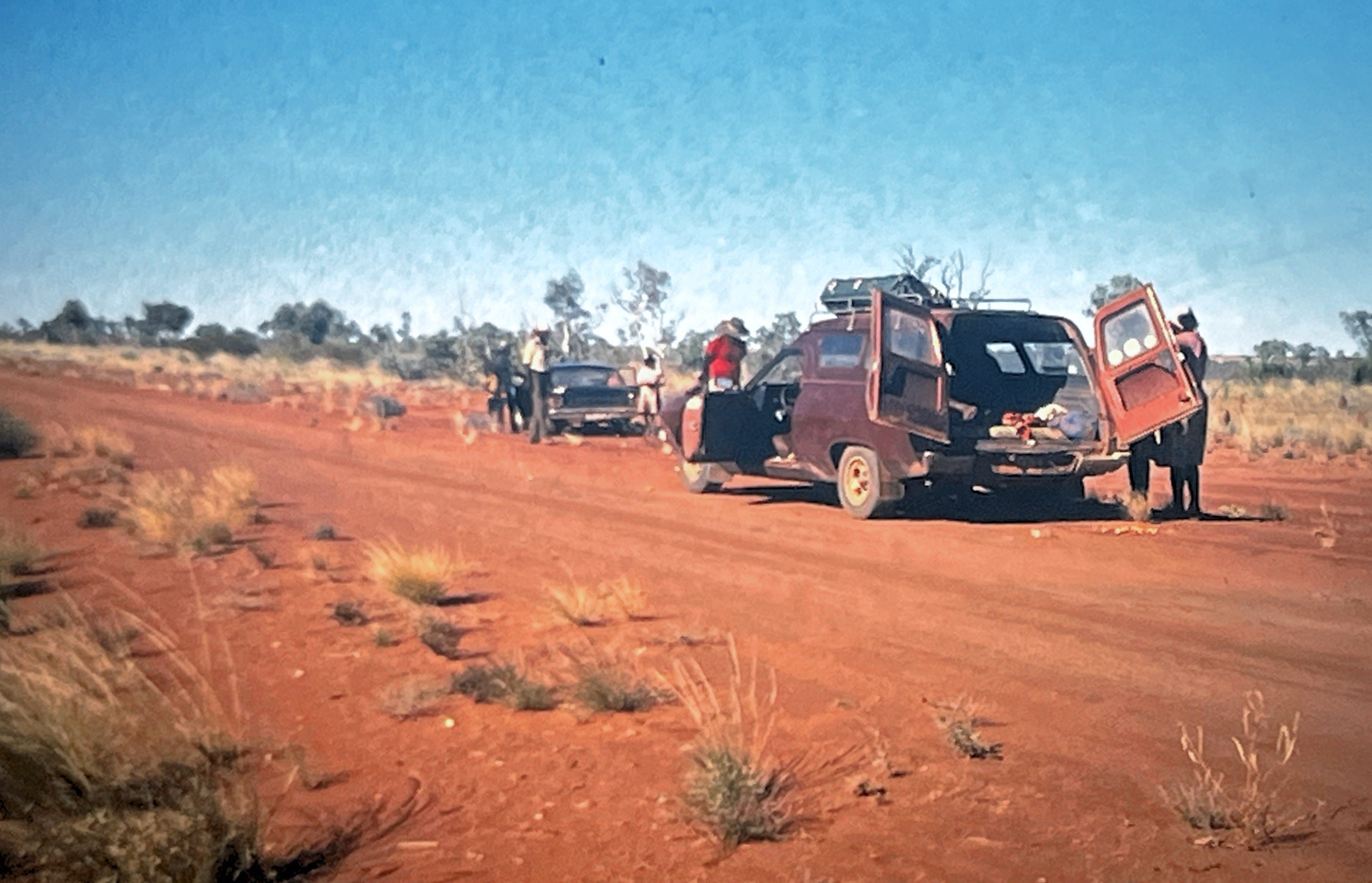
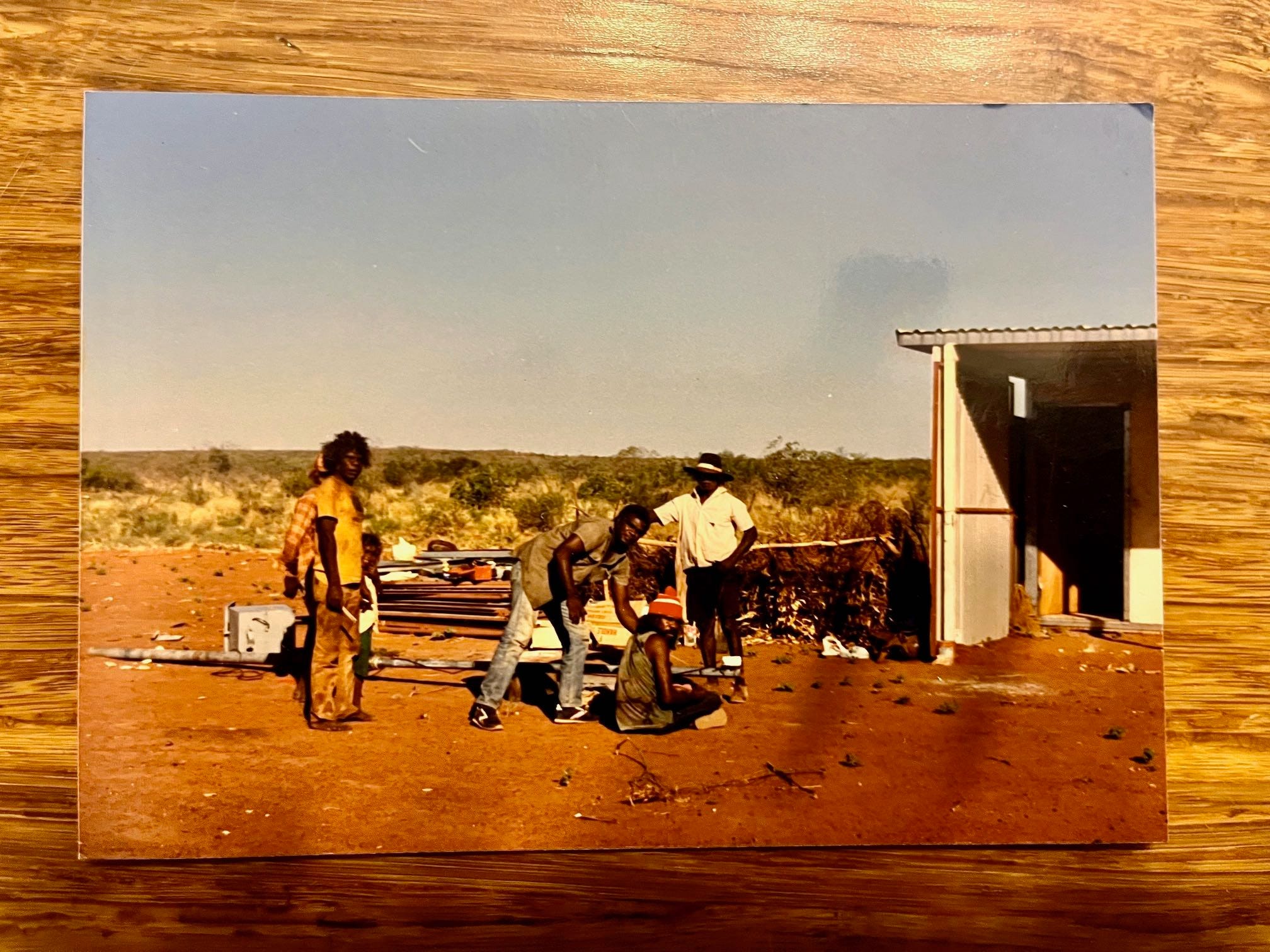
Tanami Desert Outstation community below… (yes - that’s the whole place)
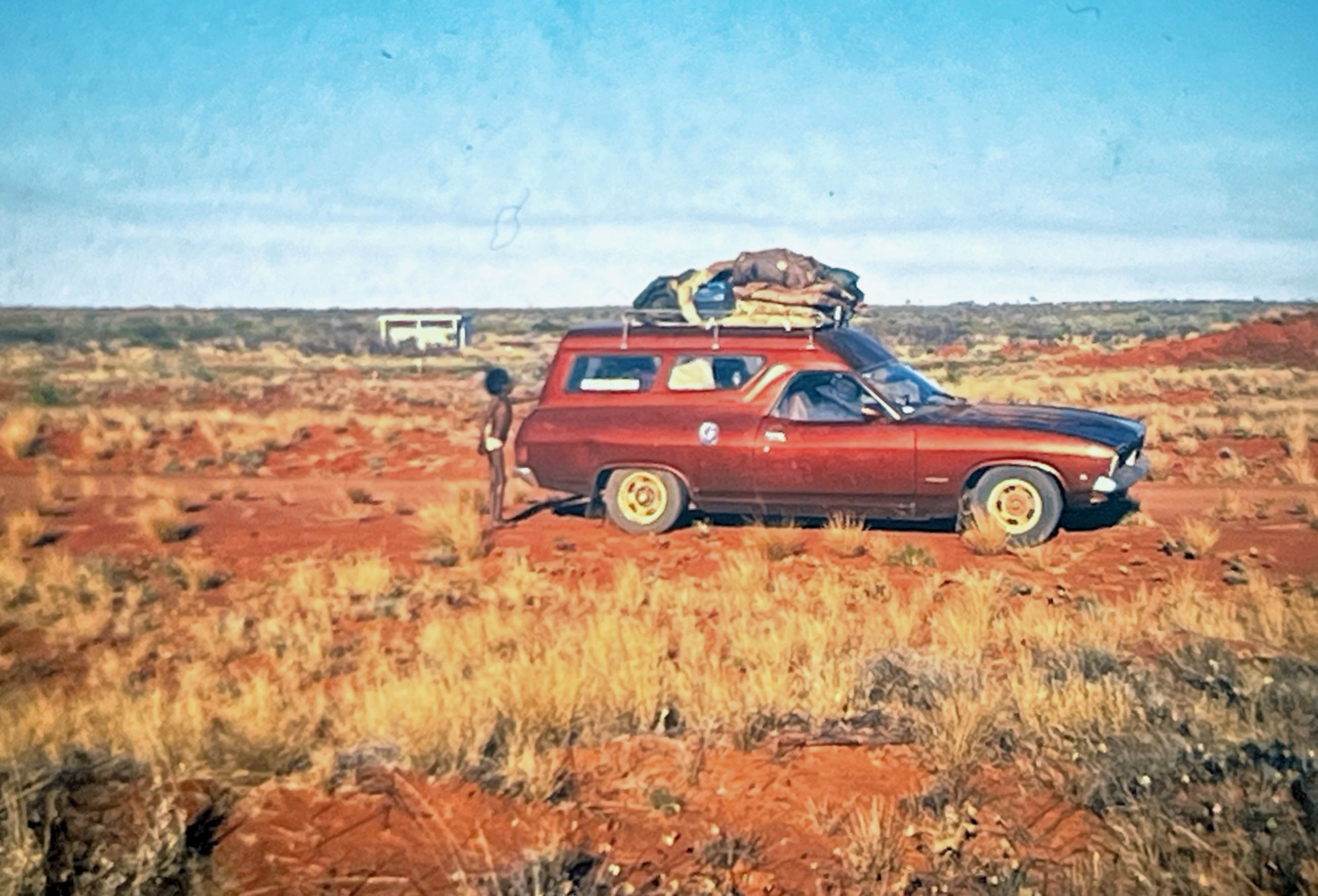
Below - Outstation life.
These days more commonly called a “Homeland Community” - but I’m using the term commonly used at the time, by the Warlpiri people themselves, for these micro-communities established out on traditional lands). Lajamanu was 560km/330 miles from the nearest town. Some of the Outations were another 200km/120 miles further out into the desert …
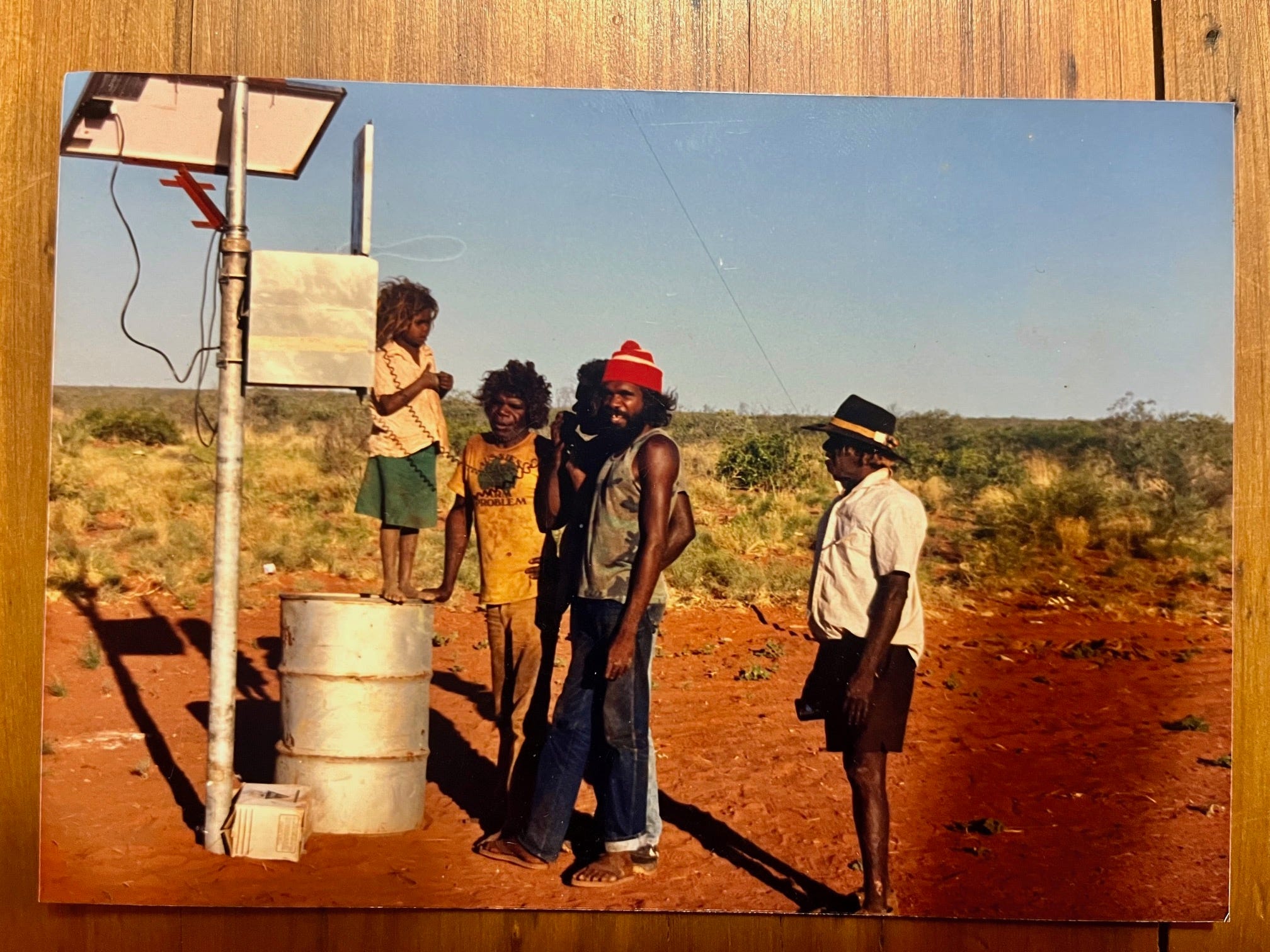
Solar powered HF radio - the only communication with the outside world.
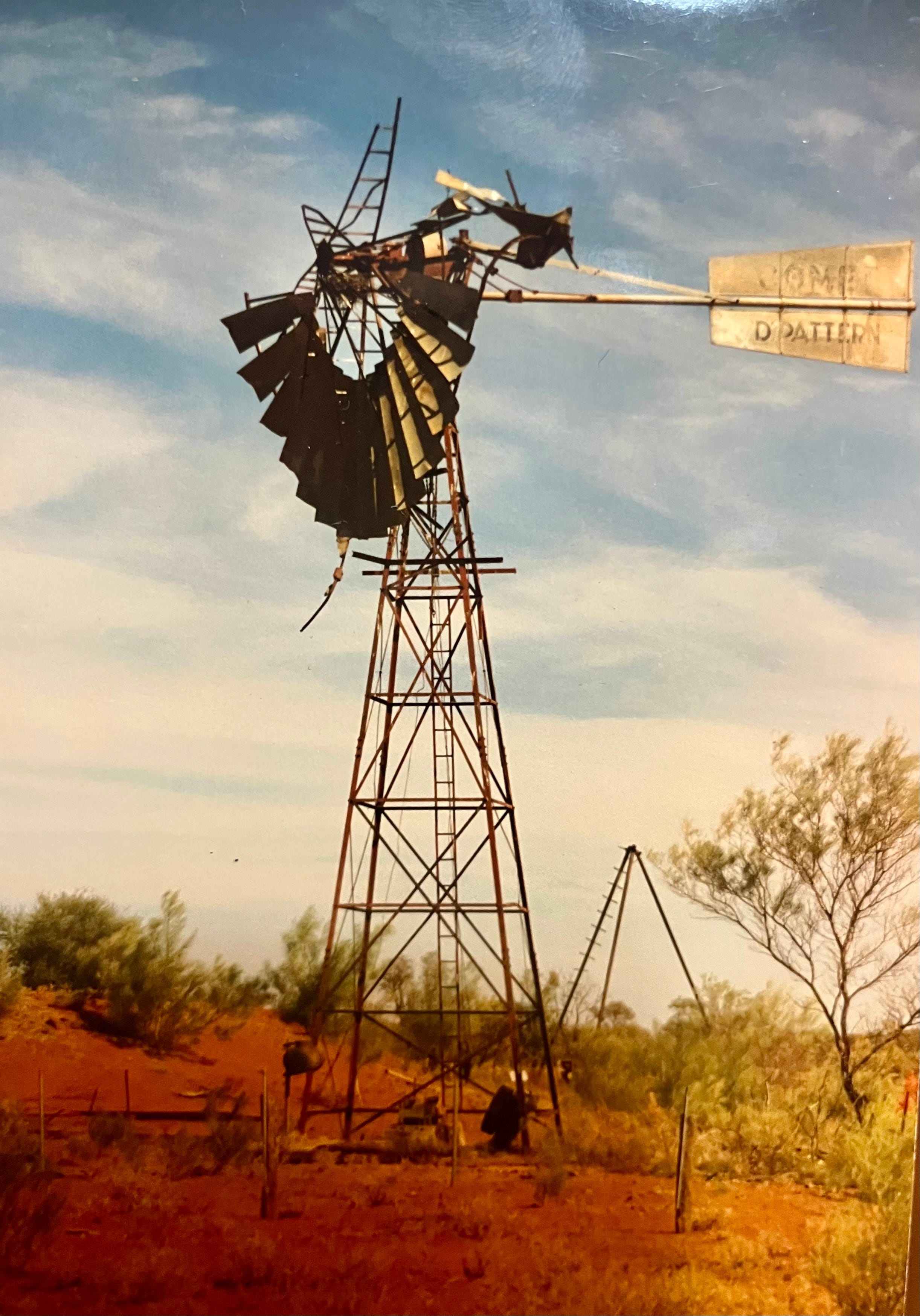
Busted desert windmill…
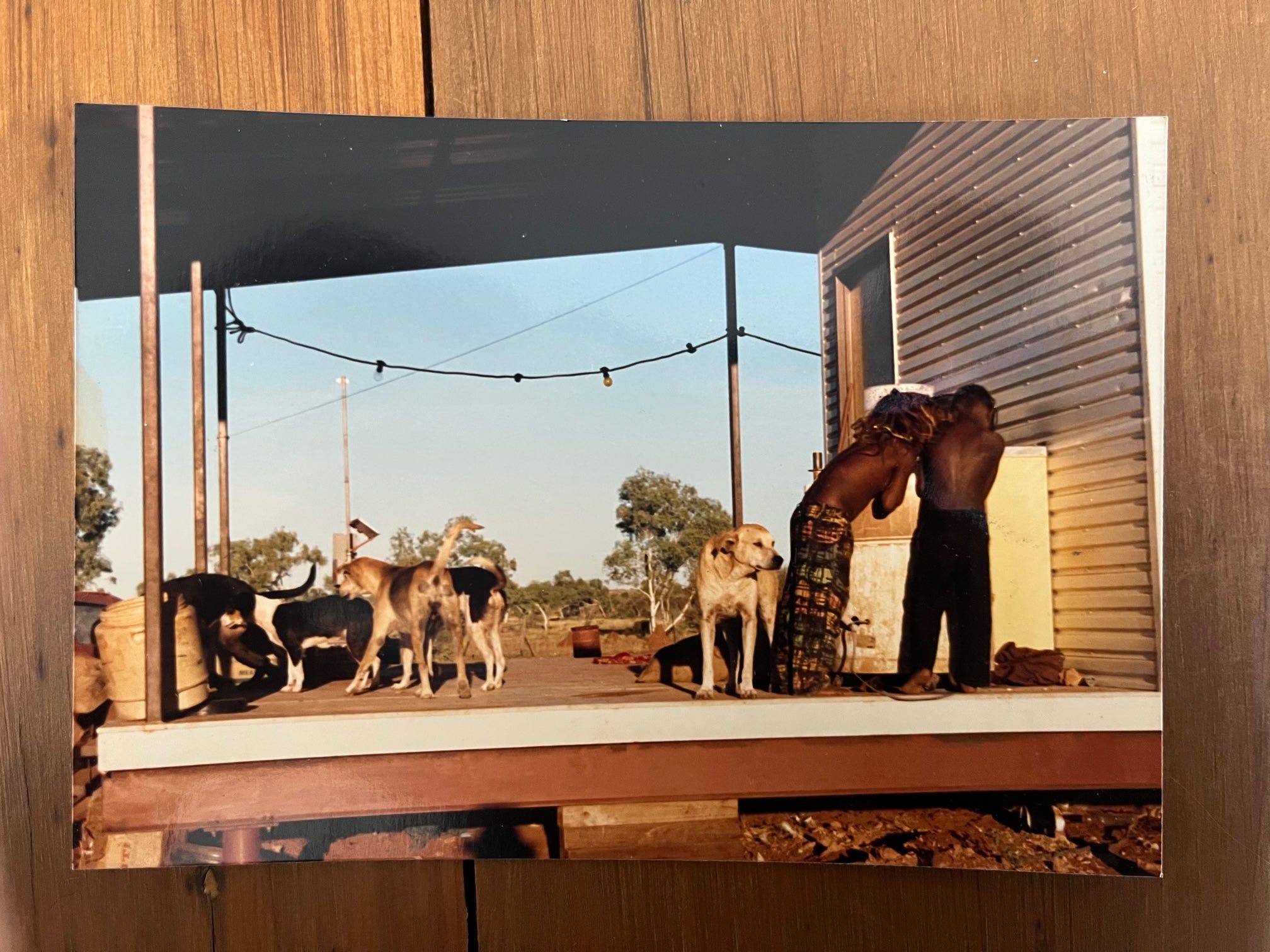
Outstation Children. Outstation dogs…
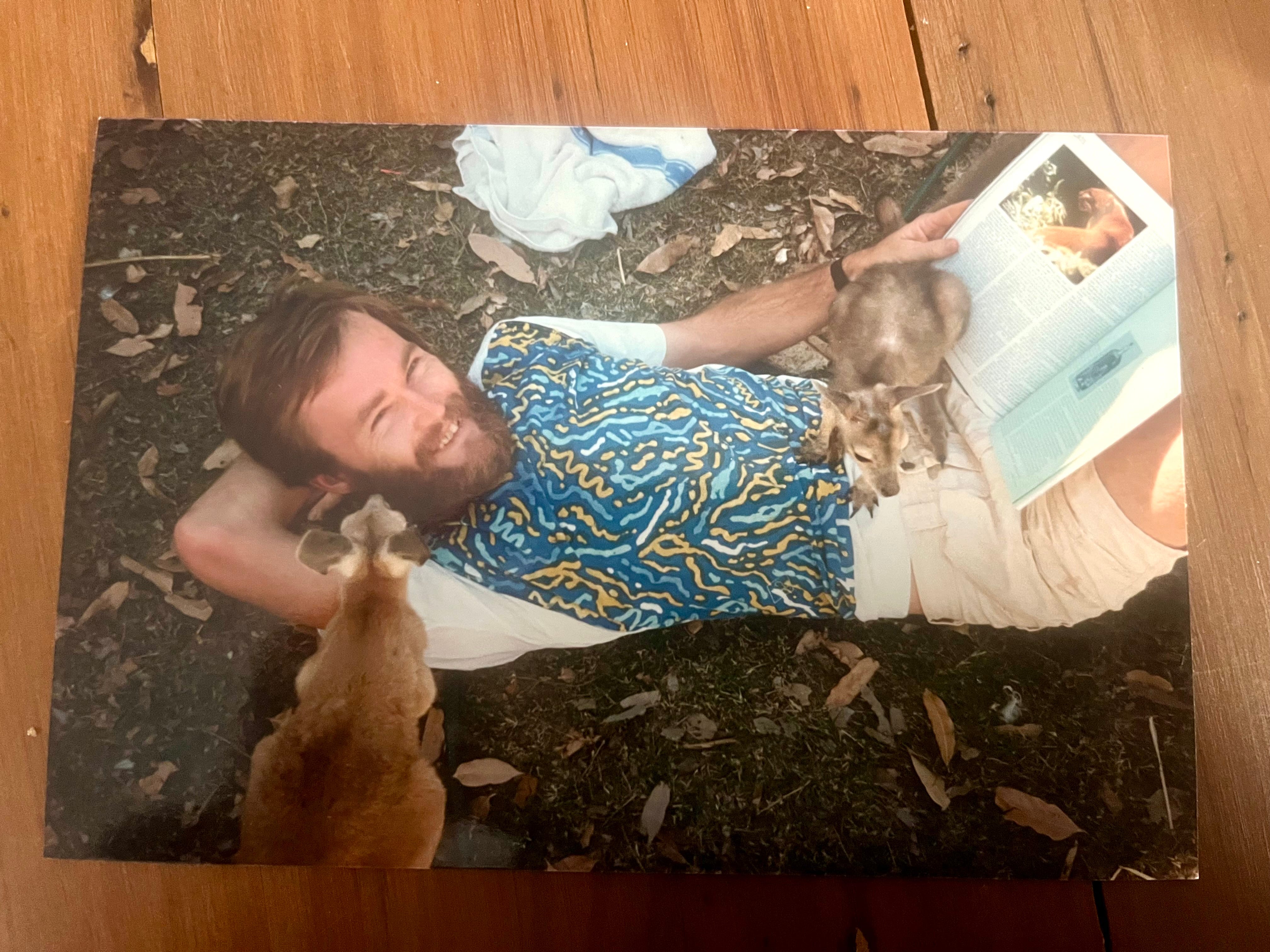
Me at Lajamanu - below - with baby kangaroos. (An adult kangaroo - hunted for food - sometimes turns out to have a joey. My wife and I raised many of these orphans by hand).
Having read Lajamanu, I felt like I was more prepared for this one. The feeling that dominated for me was a sad yet stoic and sort of oddly noble acceptance.
I mean, what can you say. Stuff happens... I imagine especially out there.
Dave, I love this poem. His reaction/non-reaction. It is....oh I don't know, maybe cold in some ways, but also funny, and also plugged into the thing that is so much larger than us.
I grew up on a farm, and this matter-of-fact attitude toward animals, eps. the deaths of animals and pets, is normal to me. And to some degree it extends to the deaths of people because I have a rather "of course" attitude towards death. It is what it is. To be shocked by it, unless of course it is shocking and there is no preparation for it like a car accident on the way home (and even then....perhaps I am always on guard), seems ridiculous. I am rereading Dune right now--You are your Water. We are transitory, we are just passing through, stopping a moment.
I had a dog who lived in the house with me and died in 2017. We hung out for 10 years, she was with me constantly--her death was different because she was constantly absent after she died. For a long time I could still hear/feel her moving beside me.
But the other deaths in my life have seemed a part of the fabric of life. And in fact, they are.
But writing this, I do feel a coldness. I'm not great with emotions, with letting them be when they occur, letting them stay. There is much to consider here.